SOPHIE: an AI virtual patient for clinicians

Many patients with advanced cancer misunderstand their prognosis, and some receive aggressive treatment that is unlikely to help in their final days. Good communication changes that, but practicing hard conversations with trained actors is expensive and rare. SOPHIE is a virtual patient that clinicians can talk to anytime, with automated feedback on how they communicate.

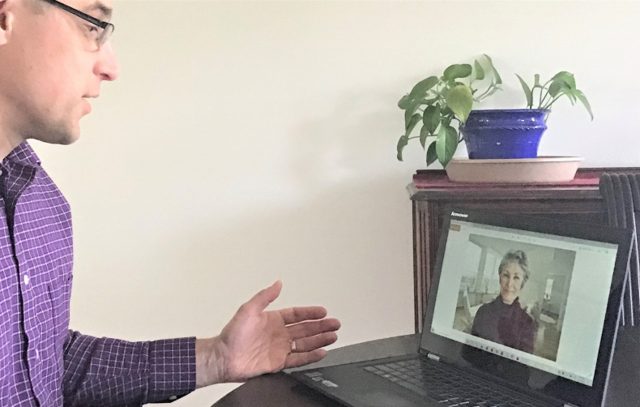
A physician practices a serious-illness conversation with SOPHIE, the Standardized Online Patient for Healthcare Interaction Education.
386real conversations between oncologists and late-stage cancer patients analyzed to design SOPHIE
3Eswhat SOPHIE teaches and scores: empathy, being explicit, and empowering the patient
RCTrandomized controlled trial showing improved serious-illness communication (JMIR Medical Education 2026)
2014year the project began, with palliative care physician Ronald Epstein

2014 to 2020

Learning from real doctor-patient conversations

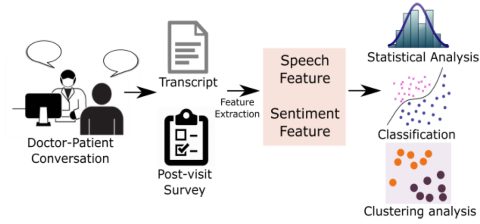
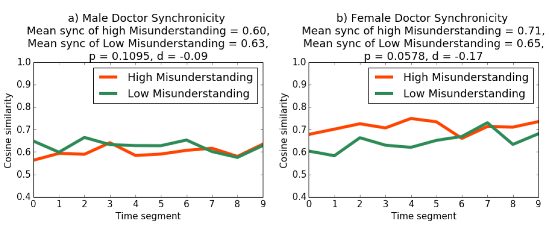
SOPHIE began in 2014 with a conversation with Ronald Epstein at the University of Rochester Medical Center. We analyzed 386 conversations between oncologists and patients with late-stage cancer. Two patterns stood out: lecturing (long one-sided stretches) was linked to patients misunderstanding their prognosis, while delivering technical information and ending on positive language was linked to better understanding. We also found differences in communication styles by gender.

2019 to 2024

Building a virtual patient that gives feedback

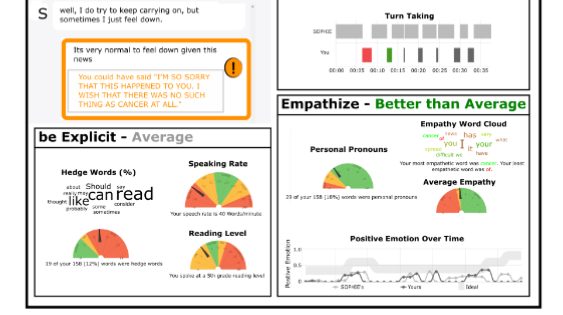
We turned those findings into SOPHIE, a virtual patient with advanced cancer, designed iteratively with clinicians and validated in a qualitative study with practicing physicians. After each conversation, SOPHIE gives automated feedback on speaking rate, turn taking, hedge words, reading level, empathy and positive emotion over time, organized around the 3Es.

2023 to 2026

Generative AI, and a randomized trial

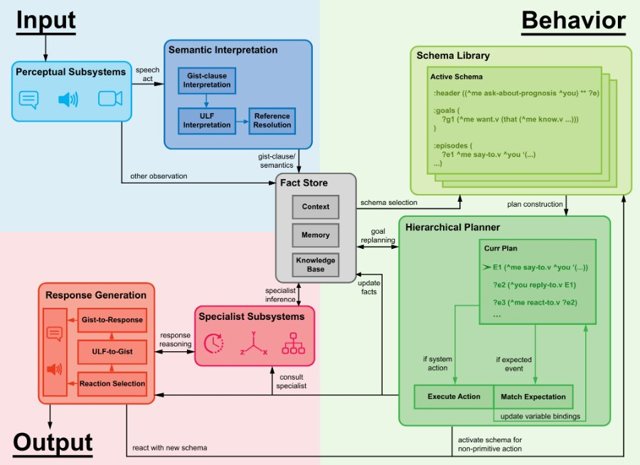
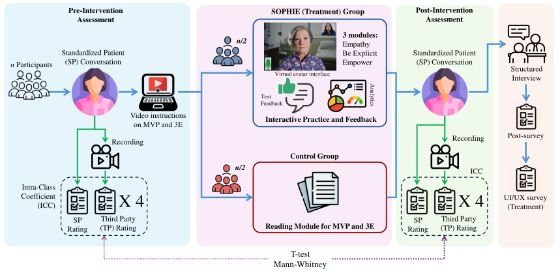
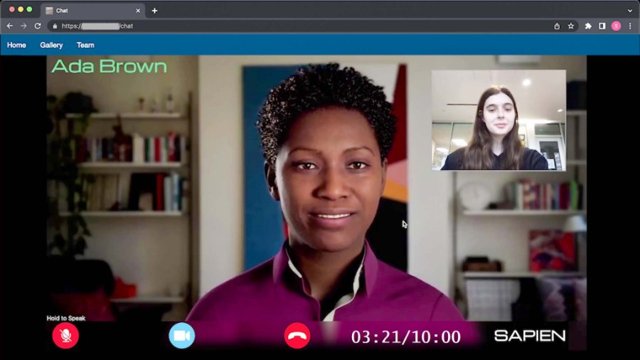
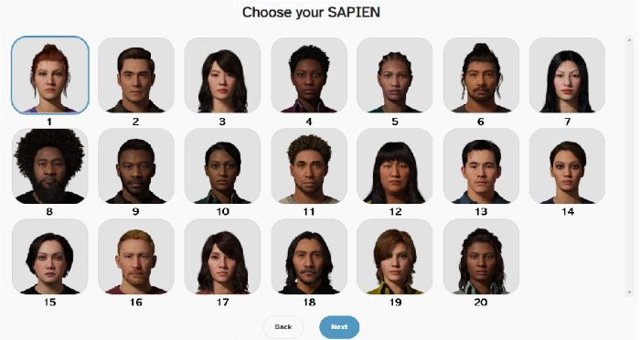
With large language models, SOPHIE became far more natural to talk to. In a randomized controlled trial, clinicians who practiced with SOPHIE communicated better in later conversations with standardized patients than those who studied written material. We also built SAPIEN, a platform for affective virtual agents powered by LLMs.

2025 to 2026

From oncology to dentistry, therapy and medical school

SOPHIE is now used beyond cancer care. At the Eastman Institute for Oral Health, dental residents practice perinatal conversations with expectant mothers. With Georgia Tech and Emory, we explored training psychotherapists with virtual patients. In 2025, medical students in a University of Rochester Medical Center clerkship practiced with SOPHIE as part of their training.

The people behind SOPHIE

SOPHIE is a long collaboration with Ronald Epstein, Thomas Carroll and Lenhart Schubert. Four generations of PhD students built it: Rafayet Ali, Taylan Sen, Kurtis Haut (in memoriam) and Masum Hasan, along with many undergraduates.

More

← All research