AI, creativity and belief in social networks

Who we connect with online shapes what we think and create. We run controlled online experiments in which people generate ideas or form opinions inside social networks we design, to learn how network structure, popularity cues and AI shape creativity, belief and misinformation, and how to design platforms and AI that make people more creative and more open-minded.

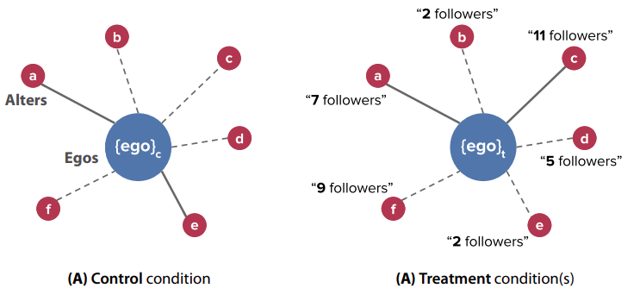
An online experiment: participants generate ideas while seeing peers' ideas, with or without cues such as follower counts.
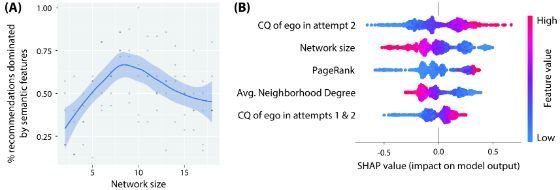
Goldilocksa middle level of exposure to others' ideas produces the most novel ideas (PNAS Nexus 2022)
163participants in our experiments on randomized feeds and belief rigidity
3.99 / 5persuasiveness of personalized LLM responses to political misinformation (UMAP 2025)
AAACOutstanding PhD Dissertation Award for this line of work (Raiyan Abdul Baten, 2023)

2020 to 2022

How networks shape creativity

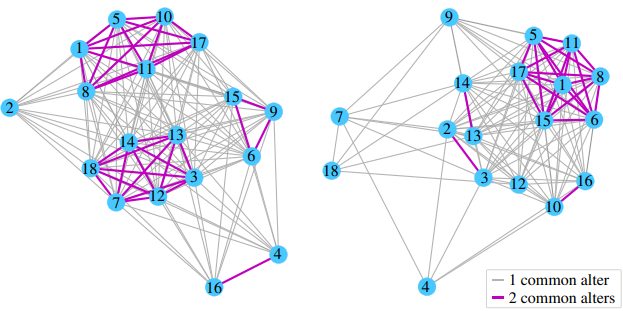
When people brainstorm while seeing each other's ideas, whom they choose to follow matters. Seeing a moderate, 'Goldilocks' level of ideas from others produces the most novel ideas; too little or too much hurts. Visible cues to gender and race reduced creativity in diverse networks, because people grouped with similar others.

2025 to 2026

Stop following the superstars: AI for originality

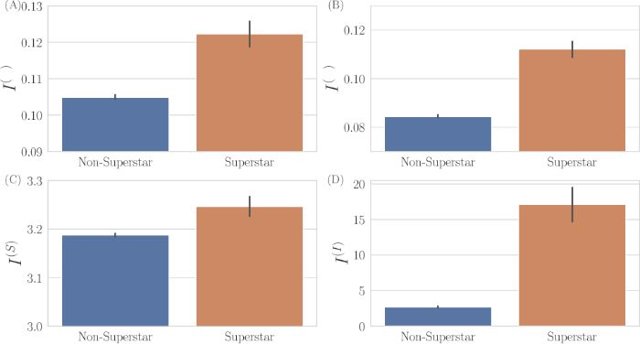
Following the most popular creators makes ideas converge. In science, researchers who follow superstars produce less novel work. In idea-generation networks, an AI that recommends peers by idea diversity instead of popularity boosts originality.

  • AI Can Enhance Creativity in Social Networks R. A. Baten, A. S. Bangash, K. Veera, G. Ghoshal, and E. Hoque npj Artificial Intelligence, 2026 · In press We built SocialMuse, an AI that recommends whom to draw inspiration from in an online idea-generation network. Networks guided by the AI outperformed AI-agnostic networks on several creativity measures and grew more decentralized.
  • Don't Follow the Leader: Independent Thinkers Create Scientific Innovation S. Kelty, R. A. Baten, A. M. Proma, E. Hoque, J. Bollen, and G. Ghoshal Humanities and Social Sciences Communications, 2025 In science, following the most visible leaders tends to produce less novel work. Independent thinkers are more likely to create scientific innovation.

2025 to 2026

Breaking echo chambers with a little randomness

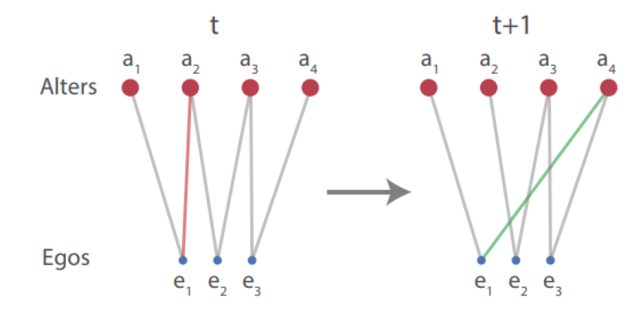
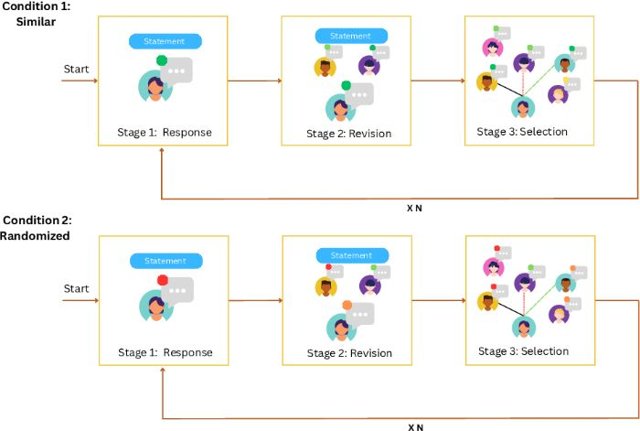
Recommendation systems that show people more of what they already engage with can harden beliefs. In experiments with 163 participants, adding some randomness to who and what people saw weakened this feedback loop and made people more open to differing views on topics such as climate change.

  • Exploring the Role of Randomization on Belief Rigidity in Online Social Networks A. M. Proma, N. Pate, R. A. Baten, S. Chen, J. N. Druckman, G. Ghoshal, and E. Hoque IEEE Transactions on Affective Computing, 2025 Social media can harden beliefs through echo chambers. Online experiments test whether adding randomness to who people are connected with loosens belief rigidity, a simple network-level intervention.

2025

Personalized AI to counter misinformation

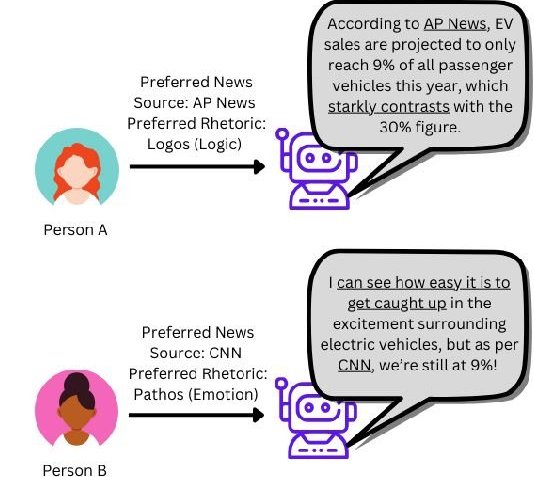
One-size-fits-all fact checks often fail. We built an LLM pipeline that tailors responses to a person's demographics and personality while staying grounded in facts through retrieval from a curated knowledge base. The responses were diverse (average cosine similarity 0.538) and rated persuasive (3.99 out of 5). The approach can be adapted to other domains.

  • Personalizing LLM Responses to Combat Political Misinformation A. M. Proma, N. Pate, J. N. Druckman, G. Ghoshal, and E. Hoque ACM Conference on User Modeling, Adaptation and Personalization (UMAP 2025), 2025 Can a chatbot correct political misinformation better if it tailors its answer to the reader? This study tests personalized LLM responses as a counter to misinformation.

Collaborators and support

This work is a collaboration with physicist Gourab Ghoshal and political scientist James Druckman, with PhD students Raiyan Abdul Baten (now at the University of South Florida), Adiba Mahbub Proma and Neeley Pate. It is funded by the Army Research Office.

More

← All research